Leveraging AI and Cloud Computing to Build Scalable SaaS Solutions for Growing Startups
See how growing startups can combine AI and cloud computing to design scalable, reliable SaaS products that support rapid growth without exploding costs.
Maira Koin
CEO, F Koin Tech
Published
20 July, 2026
For many growing startups, the biggest challenge is not coming up with a great product idea. It is building a scalable SaaS solution that can handle growth without breaking, overwhelming the team, or draining cash. This is where a smart combination of Artificial Intelligence and cloud computing can become a real competitive advantage, not just a buzzword in a pitch deck.
Used well, AI for business and modern cloud solutions allow founders to launch faster, automate more, and make better decisions using data, all while keeping infrastructure flexible and costs under control. This article explains how to think about AI and cloud from a business perspective, how they work together in SaaS products, and how to avoid common pitfalls as your startup grows.
Why AI and cloud computing matter for startup SaaS growth
Startups live and die by speed, focus, and cash flow. The combination of AI automation and cloud computing supports all three:
- Speed to market: Cloud platforms give you ready-made building blocks for software development, web development, and mobile app development so you can focus on your unique value, not basic plumbing.
- Focus on core value: AI services help automate routine tasks like support triage, document analysis, or recommendations so your team can focus on product strategy and business innovation.
- Cash efficiency: Pay-as-you-go cloud solutions and targeted Business Automation help you scale usage up or down, which is critical when revenue is still unpredictable.
In other words, AI and the cloud are not just technology trends. They are enablers of startup growth, business productivity, and a better customer experience when they are aligned with a clear business model.
What does a scalable SaaS solution really mean?
Many founders say they want a scalable product, but scalability means more than handling more users. From a business perspective, a scalable SaaS solution should:
- Support a growing number of customers without a linear increase in staff costs
- Deliver consistent performance and reliability as usage grows
- Keep unit economics healthy as you add features and markets
- Provide data visibility so you can improve, cross-sell, and upsell intelligently
AI, cloud computing, and smart business process optimization all play a role in reaching this point.
Key dimensions of scalability for SaaS startups
- Technical scalability: Your product continues to run smoothly as sign-ups and activity grow, without constant emergencies.
- Operational scalability: Onboarding, billing, support, and compliance do not collapse under higher volume.
- Team scalability: New hires can ramp up quickly because processes, tools, and data are structured and documented.
- Business scalability: You can expand into new segments or regions without rebuilding everything from scratch.
Designing with these in mind from the beginning makes it easier to layer in AI automation and to use cloud solutions intelligently instead of reactively.
How AI and cloud computing fit together in modern SaaS
AI and cloud are often discussed separately, but in practice they are closely linked in SaaS solutions. Cloud platforms provide the flexible infrastructure and managed services that AI workloads need, and AI helps make SaaS products more intelligent, adaptive, and efficient.
Cloud computing: the foundation for flexible SaaS
Cloud computing simply means renting computing power, storage, and services from a provider instead of running everything on your own servers. For startups, the main benefits are:
- Lower upfront costs: No need for hardware purchases, you pay for what you use.
- Elastic capacity: You can scale resources up during busy times and down when things are quiet.
- Faster experimentation: New environments and software solutions can be created in minutes rather than weeks.
- Security and compliance support: Major providers offer tools and certifications that small teams would struggle to implement alone.
Artificial Intelligence: adding intelligence in the right places
Artificial Intelligence in SaaS does not always mean building complex models from scratch. Often, startups get the most value from:
- Using existing AI services for text analysis, language support, or image processing
- Applying data analytics to identify patterns in user behavior
- Adding AI-powered features that improve customer experience, like recommendations or smart search
- Supporting internal teams with AI assistants for summarizing, drafting, or prioritizing work
The combination of AI and cloud lets you deliver these features quickly, test them with real users, and refine them without large infrastructure investments.
Where AI adds the most value in SaaS startups
Not every feature needs AI. For early-stage SaaS products, it is better to focus AI on a few high-impact areas that directly support growth and efficiency.
1. Smarter onboarding and customer support
First impressions matter. If new users get stuck or feel ignored, they churn quickly. AI can help by:
- Guiding new users with contextual tips based on their actions inside the app
- Using AI chat assistants to answer common questions and route complex cases
- Summarizing lengthy support conversations so future agents see context at a glance
- Flagging at-risk customers based on reduced activity or repeated issues
This reduces pressure on your support team and improves retention without adding headcount immediately.
2. Product intelligence and personalization
Great SaaS products feel like they were designed for each user. With relatively simple data analytics and AI techniques you can:
- Recommend features or content that match a user’s behavior or role
- Highlight the next best action that moves a customer closer to success
- Personalize dashboards, notifications, or learning materials
- Segment users into meaningful groups for targeted communication
These capabilities help customers see value faster, which improves startup growth metrics like activation and expansion revenue.
3. Sales, marketing, and account management support
Even if your SaaS is self-serve, there is usually some human touch in sales and success. AI tools can assist by:
- Scoring leads based on activity and fit so your team prioritizes the right accounts
- Drafting personalized outreach based on customer profiles and behavior
- Summarizing calls and meetings into clear next steps
- Predicting churn likelihood so you can intervene early
These use cases combine AI for business with workflow automation, and they are especially powerful when integrated with your CRM or enterprise software stack.
4. Back-office and operational efficiency
SaaS companies still need to invoice, reconcile payments, manage contracts, and report on performance. AI and Business Automation can help by:
- Extracting key data from contracts, invoices, and support logs
- Categorizing expenses and transactions automatically
- Generating draft reports and management summaries
- Identifying anomalies in revenue, usage, or costs
These internal improvements might not appear in your marketing, but they significantly improve business efficiency and free your leadership team to focus on growth.
Designing a cloud strategy that supports scalable SaaS
Your cloud strategy should not be an afterthought. Decisions made early on impact costs, performance, and your ability to evolve the product. From a business perspective, consider the following areas.
1. Align cloud choices with your business model
Before choosing specific services, clarify how your SaaS makes and spends money:
- Is your pricing based on users, usage, features, or outcomes
- Are you targeting small teams, mid-market companies, or enterprises
- Do you expect large seasonal spikes or steady growth
- Will you eventually need strict compliance controls for regulated industries
The answers influence how you use cloud computing, for example:
- Usage-based pricing pairs well with cloud services that scale linearly with demand.
- Enterprise targets may require data residency options and advanced security features.
- High seasonality suggests dynamic scaling rules, not fixed capacity.
2. Plan for observability and data from day one
Scalable SaaS products rely on clean, accessible data, both for operational visibility and for future AI initiatives. Early in your journey, design around:
- Product analytics: Track sign-ups, activation steps, feature usage, and churn indicators.
- System metrics: Monitor performance, error rates, and resource usage to avoid surprises.
- Business dashboards: Provide leadership with clear views of MRR, churn, customer health, and support volume.
This is where Digital Transformation is more than a buzzword. You are creating a data foundation that supports ongoing digital innovation, experimentation, and better decisions.
3. Use managed cloud services thoughtfully
Cloud providers offer many managed services that handle maintenance, scaling, and security for you. Used correctly, they:
- Reduce the need for a large in-house infrastructure team
- Shorten time to market for new features
- Shift responsibility for routine updates and patches
However, overusing niche services can lock you into one provider and create complexity. Good technology consulting helps you strike a balance between speed and long-term flexibility.
Combining AI, cloud, and automation into a scalable SaaS operating model
When AI and cloud technologies are combined with clear operational thinking, they turn your SaaS into more than just a product. They become the backbone of a repeatable, scalable business model.
Core pillars of a scalable SaaS operating model
- Automated customer lifecycle: From trial sign-up to onboarding, billing, and renewal, as much as possible is handled through workflow automation and in-app experiences.
- Central source of truth: Data from product usage, marketing, and financial systems flows into a shared view that supports data analytics and decision making.
- Modular services: Key functions such as authentication, billing, notifications, and AI features are treated as reusable components, which speeds up custom software development for new features or products.
- Continuous improvement: Your team regularly reviews metrics, experiments with changes, and iterates on product and processes.
Practical roadmap: from MVP to scalable SaaS platform
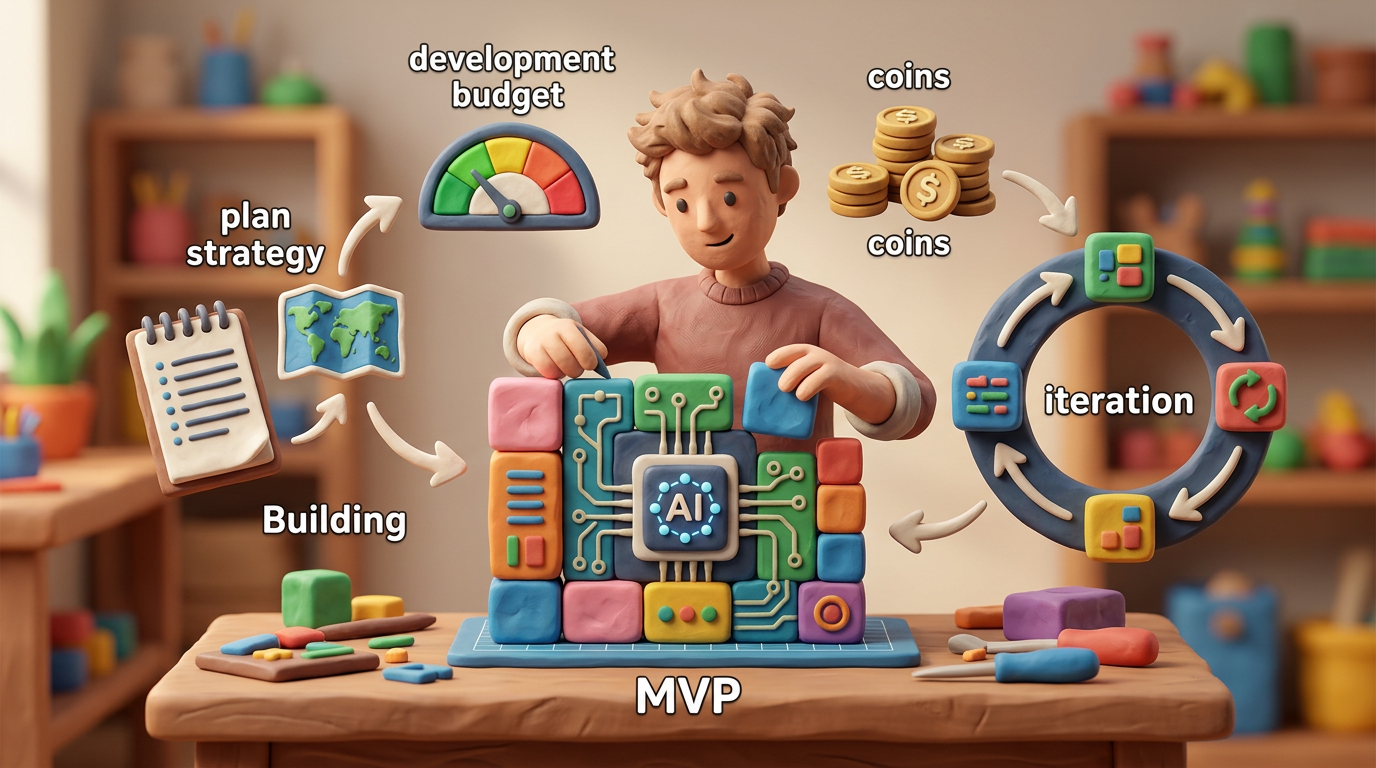
You do not need to build a “perfect” platform on day one. A staged approach helps you balance learning with long-term scalability.
Stage 1: Launch a focused MVP on the cloud
At this stage, your goal is to validate the problem and solution, not to optimize everything. Focus on:
- A clear core feature set that solves a specific problem for a narrow audience
- Basic web development and, if needed, mobile app development with simple sign-up and onboarding
- Essential e-commerce solutions for subscriptions and payments
- Cloud-based infrastructure that is easy to monitor and adjust
At this point, simple rules and basic automation are enough. Use AI only where it directly supports your primary value proposition or saves your team significant time.
Stage 2: Add automation to remove friction
Once your MVP has traction, focus on Business Automation around your key workflows:
- Automated emails and in-app prompts that help new users reach first value quickly
- Basic support automation, for example routing tickets and providing instant answers for FAQs
- Billing automation for trials, upgrades, renewals, and failed payments
- Internal alerts when enterprise customers face issues or show signs of churn
This combination of cloud tools and automation directly improves business productivity and customer experience.
Stage 3: Layer in targeted AI capabilities
With data and core workflows in place, you can safely introduce AI features that:
- Personalize the product experience based on user behavior
- Provide intelligent search, recommendations, or content creation
- Support sales and success teams with insights and summaries
- Help leadership see trends and anomalies more quickly
These investments turn your SaaS into a smarter platform and differentiate you from competitors who still rely on manual analysis and generic experiences.
Stage 4: Expand into a platform or ecosystem
Once you have a stable, scalable core, Digital Strategy shifts to expansion:
- Adding complementary modules or products using your existing cloud solutions and shared services
- Opening APIs or integrations for partners and customers
- Exploring new regions, verticals, or customer segments with tailored offerings
Here, strong foundations in AI, cloud, and data help you move quickly while maintaining control over quality and costs.
Common mistakes when using AI and cloud in SaaS startups
Many early-stage teams fall into similar traps when they adopt AI and cloud technologies. Being aware of these risks helps you avoid expensive detours.
Mistake 1: Starting with advanced AI instead of clear outcomes
Founders sometimes invest in complex AI models before they have enough data or a clear use case. This leads to long projects that do not move key metrics.
Better approach: Start with simple, high-impact AI use cases, such as support assistance, lead scoring, or content summarization. Tie each initiative to a concrete outcome like faster response times, higher activation rates, or fewer manual hours.
Mistake 2: Over-optimizing infrastructure too early
It can be tempting to design for millions of users before you have your first hundred. This often results in complexity that slows development and limits experimentation.
Better approach: Use straightforward cloud architectures initially and refine them as you gain traction. Measure actual usage, then invest in scalability where bottlenecks appear.
Mistake 3: Ignoring data quality and governance
Poorly structured data, inconsistent tracking, and missing context make AI and analytics far less useful.
Better approach: Define a small set of critical data points, for example accounts, users, plans, key actions, and outcomes. Make sure these are captured consistently, documented, and accessible for data analytics and reporting.
Mistake 4: Treating AI as a replacement for human expertise
Automated decisions without human oversight can frustrate customers and create risk, especially in complex B2B environments.
Better approach: Use AI as a copilot for your teams and customers. Let AI handle repetitive and pattern-based tasks, while humans make final decisions in sensitive or high-value situations.
Mistake 5: Underestimating change management
New tools and AI features change how your team works. If people are not prepared, adoption will be slow and benefits limited.
Better approach: Involve your team in selecting and shaping new tools. Provide simple guides, share the business “why,” and encourage feedback so you can refine workflows together.
Practical tips for founders planning an AI and cloud-enabled SaaS
You do not need to be a technical founder to make good technology choices. Focus on a few practical principles.
1. Translate technology into business questions
Instead of asking, “Which AI model should we use,” ask:
- Which decisions or tasks slow us down today
- Where do customers experience the most friction
- What do we wish we could see in real time about our business
Then explore how AI, Business Automation, and cloud solutions can help with those specific issues.
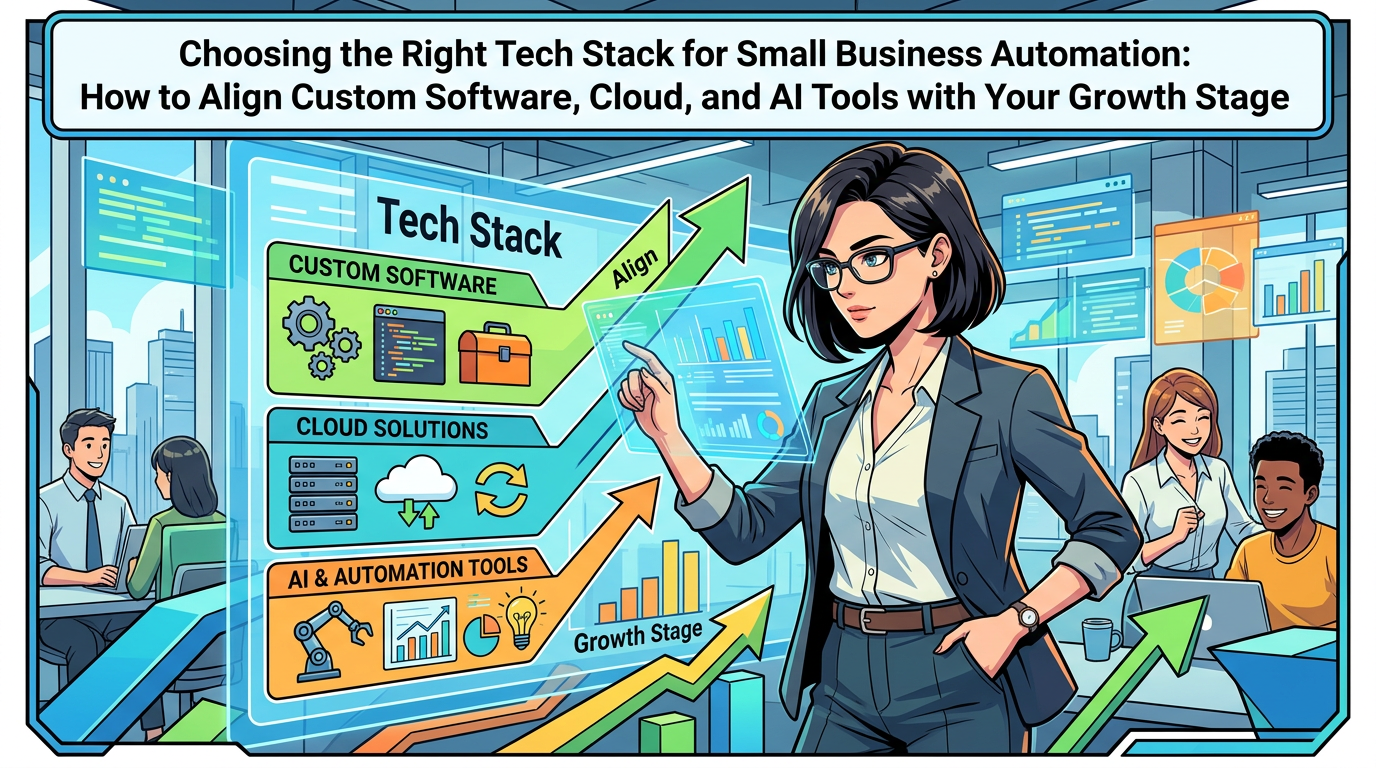
2. Keep your technology stack intentionally small
Tool sprawl kills business efficiency. Aim for a compact, integrated set of software solutions that cover:
- Your core product (web or mobile application)
- Customer data and CRM
- Billing and e-commerce solutions
- Support and communication
- Analytics and reporting
Where you have unique needs, consider custom software development instead of forcing a patchwork of tools to work together.
3. Treat experimentation as a core capability
AI and cloud both enable rapid experimentation at relatively low cost. Build habits such as:
- Running small A/B tests on onboarding flows or pricing
- Trying AI features with a limited subset of users first
- Reviewing experiment results regularly and deciding what to keep, change, or remove
This mindset turns future technology trends from unknown risks into managed opportunities.
4. Partner with experts when it matters
Founders do not need to become cloud architects or AI specialists. For high-impact decisions, it often pays to work with a technology partner experienced in technology consulting, software development, and enterprise software design. The right partner helps you:
- Choose technology that fits your stage, budget, and goals
- Avoid over-engineering your first versions
- Build a roadmap for evolving your platform over the next 12 to 24 months
Future technology trends shaping AI-powered SaaS for startups
The landscape is evolving quickly, but several clear trends will influence how SaaS startups use AI and cloud going forward.
1. Embedded AI in everyday SaaS tools
Many core tools for sales, marketing, support, and finance already include AI features. This will continue, which means founders can adopt AI for business incrementally without massive projects.
2. More powerful no-code and low-code platforms
No-code and low-code tools, combined with AI, are making it easier for non-technical team members to create simple apps, workflows, and reports. This can speed up digital innovation and relieve pressure on engineering teams, especially when guided by a clear Digital Strategy.
3. Stronger focus on trust, transparency, and compliance
As AI becomes more common in SaaS products, customers will expect transparency about how their data is used and how automated decisions are made. Startups that invest early in clear communication and responsible AI practices will build long-term trust.
4. Convergence of product analytics and customer data platforms
Tools for product usage tracking, marketing analytics, and CRM are gradually converging. This will make it easier for SaaS startups to gain a unified picture of the customer journey and to apply AI automation across marketing, product, and support.
Summary: Turning AI and cloud into a growth engine for your SaaS startup
For growing startups, AI and cloud computing are not just technical decisions. They shape how quickly you can experiment, how efficiently you can operate, and how scalable your business model becomes.
By treating Artificial Intelligence, cloud solutions, and Business Automation as part of your overall Digital Transformation strategy, you can:
- Launch SaaS products faster and with lower upfront cost
- Deliver a smoother, more personalized customer experience
- Automate routine work so your team can focus on innovation and relationships
- Use reliable data to guide product decisions and investment
- Scale operations and revenue without sacrificing quality
You do not have to adopt every new technology trend at once. Start with clear business goals, build a simple but solid cloud foundation, and add AI where it clearly supports growth and efficiency. From there, review results regularly and evolve your platform step by step.
If you are exploring how to use AI automation, cloud computing, custom software development, web development, mobile app development, or integrated e-commerce solutions to build or scale your SaaS product, the right technology partner can help you move faster with less risk. When you are ready, consider scheduling a conversation to review your vision, assess your current tools, and outline a practical roadmap for your next stage of digital growth.