Custom Software vs. SaaS
Navigating the Build-or-Buy Decision for Business Growth
Maira Koin
CEO, F Koin Tech
Published
03 August, 2026
Custom Software vs. SaaS: Navigating the Build-or-Buy Decision for Business Growth
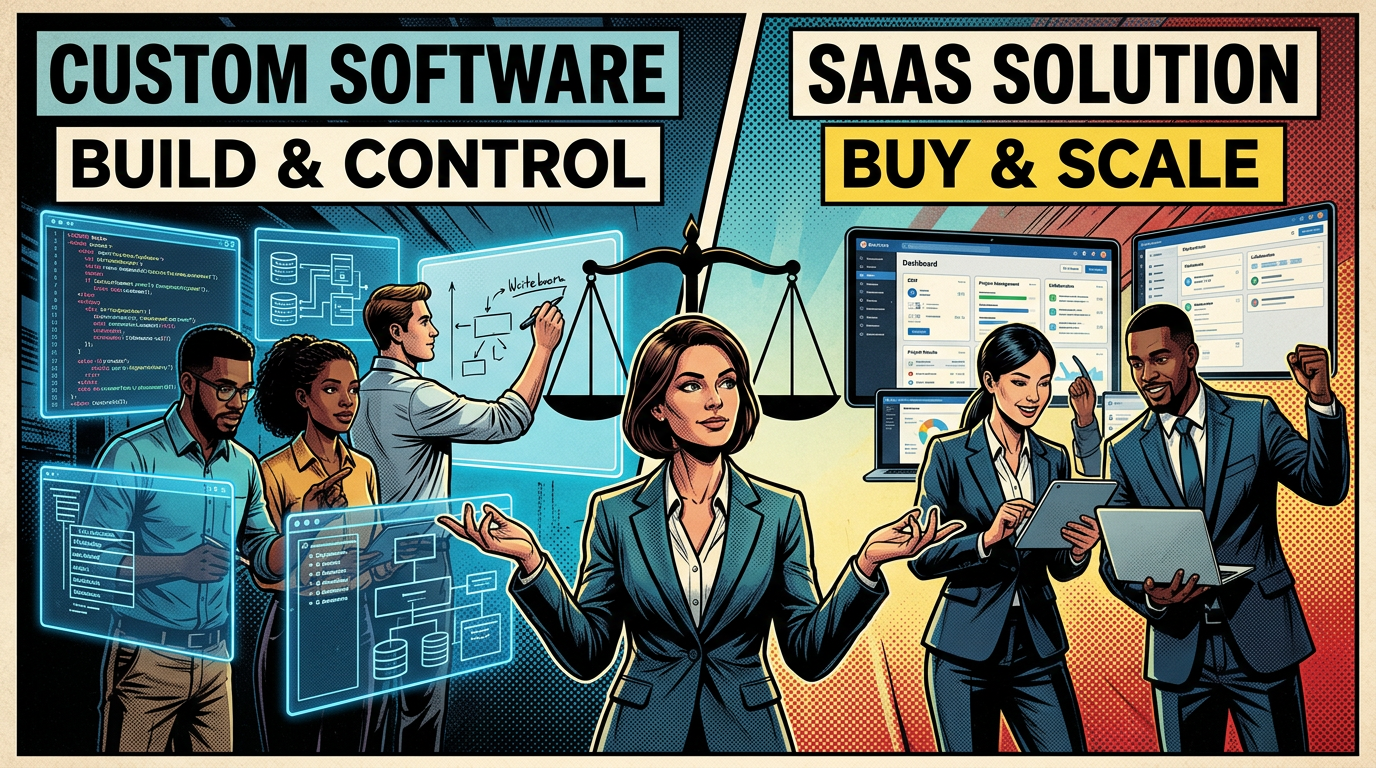
When a business looks to enhance its operations, improve customer engagement, or achieve greater efficiency, the question of technology often arises. Should you invest in a ready-made solution, or build something entirely unique? This dilemma, often framed as the "build-or-buy" decision, is central to effective digital transformation and sustainable business growth. For entrepreneurs, small business owners, and CEOs navigating a competitive landscape, choosing the right software path is critical. It impacts not only immediate operational capabilities but also long-term strategic advantage, cost, and flexibility. Understanding the fundamental differences between custom software development and Software as a Service (SaaS) solutions is the first step toward making an informed choice that aligns with your specific objectives.
Understanding Custom Software Development
Custom software, also known as bespoke software, refers to applications specifically designed, developed, and maintained for a single organization. Unlike off-the-shelf products intended for a broad market, custom software is tailor-made to meet the unique needs, processes, and branding of your business. This approach is often chosen when existing solutions fall short, or when a business seeks a distinct competitive edge through proprietary technology.
Benefits of Custom Software:
- Exact Fit for Business Processes: Custom solutions are built to precisely match your workflow, eliminating the need to adapt your operations to existing software limitations. This leads to optimized business process optimization and increased business efficiency.
- Competitive Advantage: A unique software solution can provide proprietary features that differentiate your business from competitors, fostering digital innovation and a strong market position.
- Scalability and Flexibility: Designed with your future growth in mind, custom software can easily scale up or adapt as your business evolves, offering long-term flexibility.
- Seamless Integration: Custom software development allows for deep integration with your existing systems, databases, and other applications, creating a unified technology ecosystem.
- Data Ownership and Security: You maintain full control over your data and can implement security measures that meet your specific compliance requirements, which is crucial for enterprise software.
- Long-Term Cost Savings (Potentially): While upfront costs might be higher, avoiding ongoing subscription fees and unnecessary features can lead to lower total cost of ownership over many years.
Considerations for Custom Software:
- Higher Upfront Investment: Developing custom software requires a significant initial capital outlay for design, development, and testing.
- Longer Development Time: From concept to deployment, custom software development cycles are generally longer than implementing a ready-made solution.
- Maintenance and Support Responsibility: You are responsible for ongoing maintenance, updates, and support, though this can be outsourced to your development partner.
Understanding SaaS (Software as a Service) Solutions
Software as a Service (SaaS) represents a different model. Here, software is centrally hosted by a vendor and made available to users over the internet, typically on a subscription basis. Think of popular tools for email marketing, customer relationship management (CRM), project management, or e-commerce solutions. Users access the software via a web browser or mobile app, without needing to install, maintain, or update it themselves. This model is a cornerstone of modern cloud computing and digital strategy.
Benefits of SaaS Solutions:
- Lower Upfront Costs: SaaS often involves a predictable monthly or annual subscription fee, reducing the initial capital expenditure. This is particularly appealing for startup growth and small business technology budgets.
- Quick Deployment: As the software is already developed and hosted, implementation can be very fast, allowing businesses to realize value quickly.
- Reduced IT Burden: The vendor handles all infrastructure, maintenance, security, and updates, freeing up your internal IT resources.
- Accessibility: SaaS applications are accessible from anywhere with an internet connection, promoting business productivity and flexible work arrangements.
- Automatic Updates: Users automatically benefit from the latest features and security patches without manual effort.
- Scalability of Users: Easily add or remove users based on your needs, making it simple to scale operations without complex infrastructure changes.
Considerations for SaaS Solutions:
- Limited Customization: While many SaaS platforms offer configuration options, they rarely provide the deep customization possible with custom software. Your business processes might need to adapt to the software.
- Vendor Dependency: Your operations rely on the SaaS provider for service availability, data security, and feature development.
- Subscription Costs Over Time: While low initially, ongoing subscription fees can add up, potentially exceeding the cost of a custom solution over many years.
- Integration Challenges: Integrating different SaaS platforms can sometimes be complex, requiring custom API workarounds if native integrations are insufficient.
- Potential Feature Bloat: You might pay for features you never use, or find essential features missing.
Key Factors for the Build-or-Buy Decision
Making the right choice involves a careful assessment of several critical factors specific to your organization. This decision impacts your digital transformation journey and future technology trends.
1. Uniqueness of Business Needs and Processes
Does your business operate with highly specialized or proprietary processes that are core to your competitive advantage? If standard software solutions cannot adequately support these unique workflows, custom software development becomes a strong contender. For example, a business with a unique manufacturing process might need tailored workflow automation that no off-the-shelf product offers.
2. Budget and Timeline
Budget: Custom software generally requires a larger upfront investment but may offer lower long-term costs if maintenance is managed well. SaaS typically has lower initial costs but ongoing subscription fees. Consider your capital expenditure versus operational expenditure preferences.
Timeline: If you need a solution deployed rapidly, SaaS is usually faster to implement. Custom development requires more time for design, coding, testing, and deployment.
3. Scalability and Flexibility
How do you envision your business growing and evolving? Custom software can be designed with architectural flexibility to accommodate future requirements and technology trends, including integration with Artificial Intelligence or advanced data analytics. SaaS solutions scale easily in terms of user count but might lack flexibility for unique feature additions.
4. Integration with Existing Systems
Your current technology stack is a vital consideration. If the new software needs to communicate seamlessly with existing enterprise software, databases, or third-party tools, custom solutions often offer more robust and precise integration capabilities. SaaS platforms rely on pre-built integrations or APIs, which might not always cover every specific need.
5. Data Security and Compliance
For businesses handling sensitive data or operating in highly regulated industries, data ownership, security protocols, and compliance standards are paramount. Custom software provides direct control over these aspects. With SaaS, you depend on the vendor's security measures and compliance certifications, which need thorough vetting. Protecting customer data is crucial for maintaining customer experience and trust.
6. Competitive Advantage
Will the new software be a differentiator in your market? If it's designed to automate a unique service offering, improve customer interaction in a novel way, or streamline operations far beyond what competitors achieve, custom software can be a significant source of competitive advantage. SaaS solutions, by their nature, are available to everyone, making differentiation harder to achieve solely through the software itself.
7. Internal Resources and Expertise
Do you have the in-house technical talent to manage, maintain, or even contribute to custom software development? If not, relying on a trusted software development partner is essential. SaaS frees you from these internal resource demands, shifting the burden to the vendor.
When to Choose Custom Software Development
Opt for custom software development when:
- Your core business processes are highly specialized and not well-served by existing SaaS options.
- You need a unique solution to gain a significant competitive edge or to address a specific market gap.
- Deep, precise integration with a complex existing technology ecosystem is crucial.
- You require absolute control over data security, compliance, and intellectual property.
- The software will evolve significantly over time, requiring maximum flexibility and scalability tailored to your long-term vision.
- You have the budget for a larger upfront investment and understand the long-term value of a bespoke solution.
- You plan to integrate advanced capabilities like AI for Business, requiring custom algorithms or unique data processing. A tailored system can better incorporate features that enhance customer lifetime value or optimize pricing strategies.
When to Choose SaaS Solutions
SaaS is often the ideal choice when:
- Your business functions are standard and align well with what existing off-the-shelf products offer (e.g., standard CRM, accounting, or project management).
- You have a limited budget for upfront costs and prefer predictable operational expenses.
- Rapid deployment is critical, allowing you to start using the software almost immediately.
- You want to offload IT infrastructure and maintenance responsibilities to a third party.
- Accessibility from various devices and locations is a high priority without complex setup.
- Your focus is on quick business productivity gains through proven solutions.
- You primarily need solutions for common tasks such as email marketing, basic web development, or standardized data analytics.
Hybrid Approaches: The Best of Both Worlds
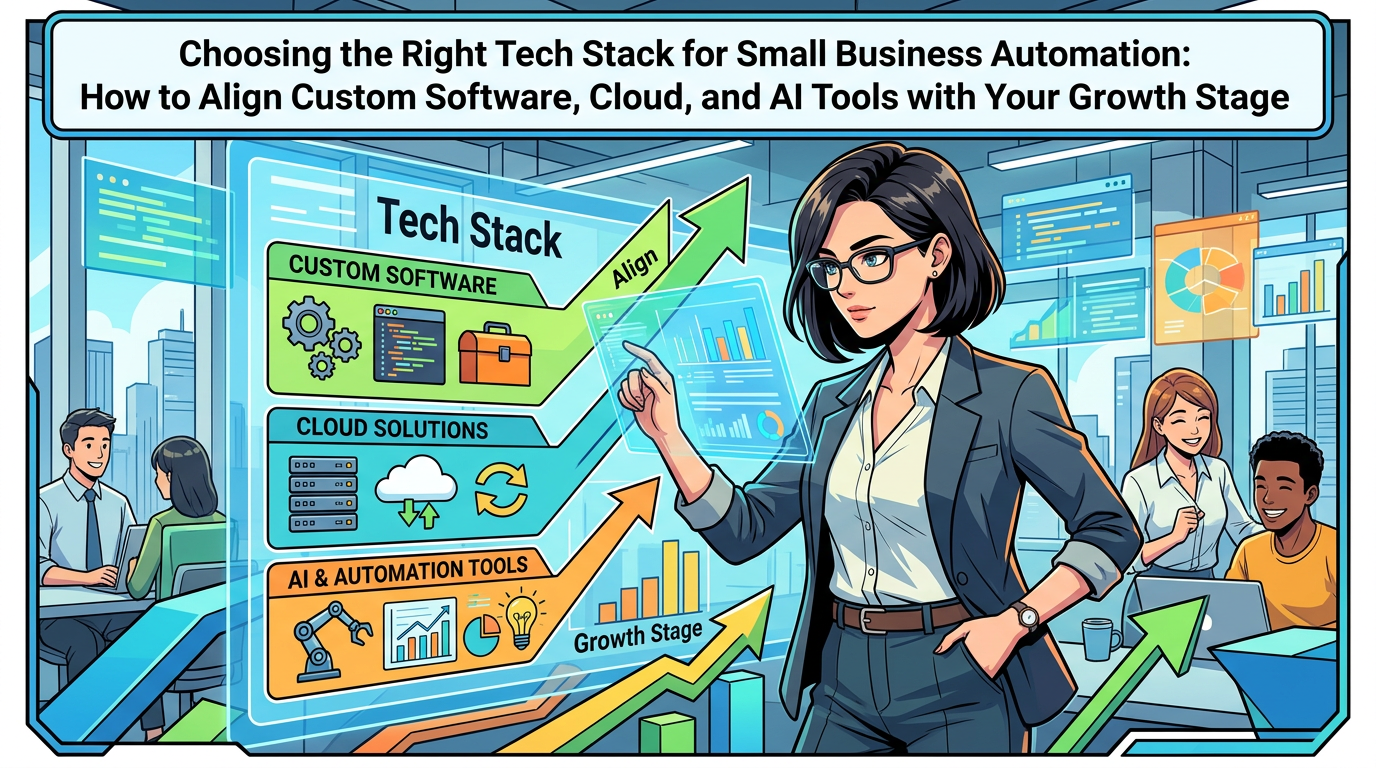
The build-or-buy decision doesn't always have to be an either/or scenario. Many businesses find success with a hybrid approach. This involves leveraging robust SaaS solutions for common, non-differentiating functions (like HR or standard accounting) while investing in custom software development for core, unique, and strategic areas of their business. This strategy allows you to benefit from the speed and cost-effectiveness of SaaS for general tasks, combined with the tailored power of custom solutions for mission-critical processes that drive digital innovation.
For instance, you might use a standard SaaS CRM for customer management but develop custom software to integrate it with a unique sales configurator or a specialized service delivery platform. Such an approach could greatly benefit from AI automation, where custom modules feed into or draw data from your SaaS ecosystem, creating powerful workflow automation and enhancing the overall customer experience. For example, a custom system might analyze customer feedback in unique ways to inform your AI Customer Journey Guide, while basic customer data resides in a standard SaaS CRM.
Common Misconceptions to Avoid
- "SaaS is always cheaper." While initial costs are lower, long-term subscription fees can sometimes exceed the total cost of ownership for a custom solution, especially as user counts or features grow.
- "Custom software takes forever." While it takes longer than activating a SaaS account, modern agile software development methodologies can deliver functional components iteratively, providing value sooner than traditional approaches.
- "SaaS is less secure." Reputable SaaS providers invest heavily in security infrastructure and expertise, often surpassing what a small or medium business could afford in-house. However, the control remains with the vendor.
- "Custom software is only for large enterprises." Small businesses and startups can greatly benefit from custom solutions when their unique value proposition hinges on a specific software capability.
Practical Steps for Making Your Decision
To navigate this crucial decision effectively, consider these actionable steps:
- Thoroughly Define Your Requirements: Before looking at any solution, clearly document your business processes, current pain points, desired functionalities, and strategic goals. What problems are you trying to solve? What level of business productivity are you aiming for?
- Evaluate the Uniqueness of Your Needs: Assess how standard or unique your requirements are. If your needs are highly specific, a custom solution becomes more appealing.
- Research Available SaaS Options: Investigate leading SaaS solutions in your industry. Conduct demos, read reviews, and understand their feature sets, integration capabilities, and pricing models.
- Calculate Total Cost of Ownership (TCO): For both custom and SaaS options, look beyond immediate costs. Include development, licensing, implementation, training, maintenance, support, and potential integration costs over a 3-5 year period.
- Consider Future Trends and Scalability: Think about how the chosen solution will support your business five or ten years down the line, especially with accelerating technology trends like AI for business automation and deeper digital transformation.
- Consult Experts: Engage with technology consulting professionals who can provide an unbiased assessment of your needs and guide you through the pros and cons of each approach for your specific context.
Conclusion
The choice between custom software development and SaaS solutions is a strategic one, deeply intertwined with your business's unique identity, growth trajectory, and digital strategy. There isn't a universally "better" option; rather, the optimal decision aligns with your specific operational needs, budget, desired level of control, and long-term vision for digital innovation. By carefully weighing the benefits and considerations of each, businesses can make an informed choice that truly supports their objectives, enhances business efficiency, and paves the way for sustainable success.
Whether you're leaning towards a custom-built application to secure a competitive edge or seeking to integrate powerful SaaS tools for streamlined operations, partnering with experienced technology experts can illuminate the best path forward. For guidance on your software development project, from conceptualization to deployment and ongoing support, consider reaching out to professionals who can help translate your business goals into effective technology solutions.