Building an Agile Business Ecosystem
Integrating SaaS, Cloud, and AI for Scalable Growth
Maira Koin
CEO, F Koin Tech
Published
02 August, 2026
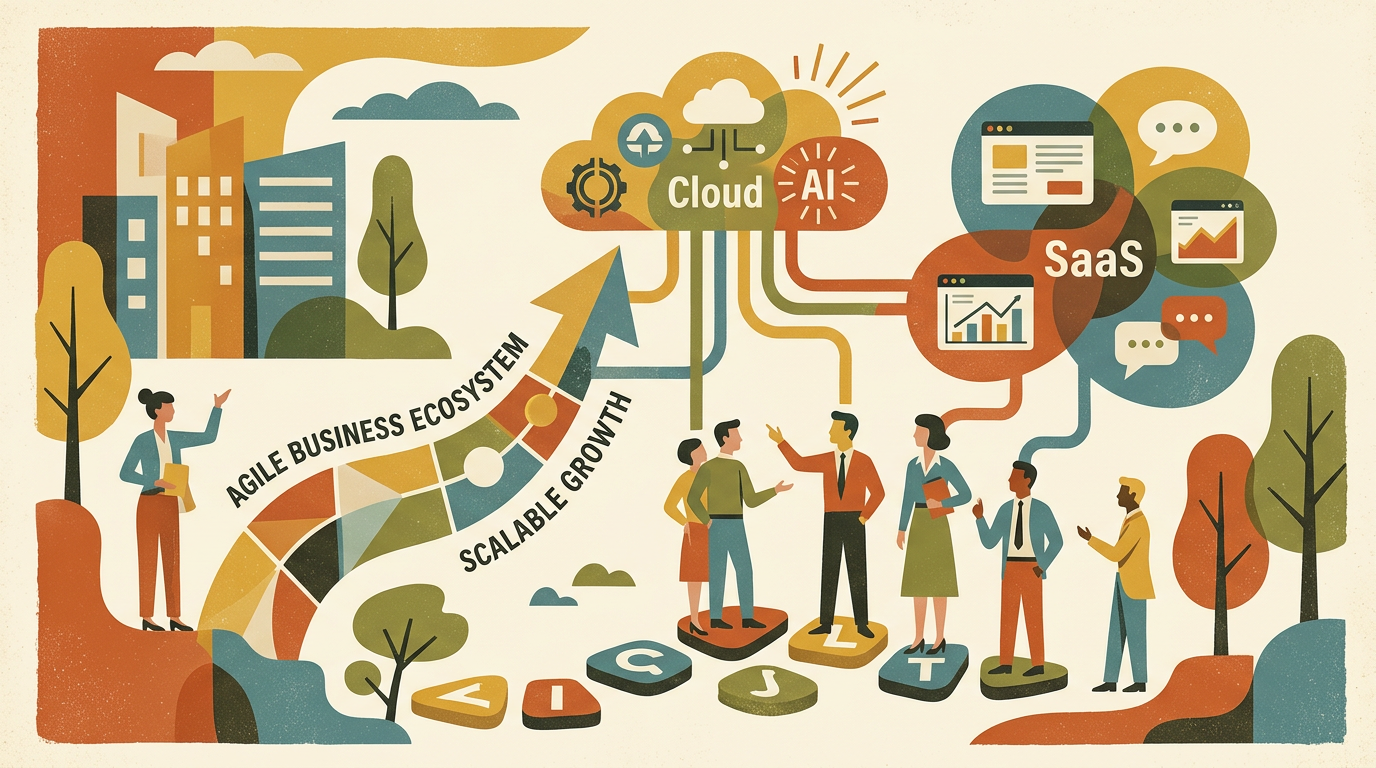
In today's fast-moving economy, businesses face constant pressure to adapt, innovate, and grow. The traditional, siloed approach to technology often hinders this agility. Forward-thinking companies are now building agile business ecosystems, a dynamic framework where Software-as-a-Service (SaaS), Cloud Computing, and Artificial Intelligence (AI) work together to drive efficiency, enhance customer experiences, and unlock new opportunities for scalable growth.
This integrated approach is not just a trend; it's a fundamental shift in how businesses leverage technology to stay competitive. It’s about creating a responsive, interconnected environment that allows your organization to move faster, make smarter decisions, and optimize every aspect of its operations.
Why Agile Business Ecosystems Matter Today
The pace of Digital Transformation demands more than just adopting new tools. It requires a strategic vision to integrate those tools into a cohesive system. An agile business ecosystem provides:
- Enhanced Responsiveness: Quickly adapt to market changes, customer demands, and new business models.
- Operational Efficiency: Automate repetitive tasks, streamline workflows, and reduce manual errors, leading to significant cost savings.
- Scalability: Easily expand or contract resources based on business needs without major infrastructure overhauls.
- Data-Driven Decisions: Access and analyze comprehensive data across all operations for informed strategic planning.
- Improved Customer Experience: Deliver personalized and consistent interactions across all touchpoints, fostering loyalty and growth.
For any business owner or entrepreneur looking for Startup Growth, understanding how these three pillars (SaaS, Cloud, AI) synergize is crucial for long-term success.
SaaS: The Foundation of Modern Business Operations
SaaS solutions have revolutionized how businesses access and utilize software. Instead of installing and maintaining software on individual computers or servers, SaaS applications are hosted in the cloud and accessed via a web browser.
Key Benefits of SaaS for Business Productivity:
- Lower Upfront Costs: Pay-as-you-go subscription models eliminate large initial investments in software licenses and infrastructure.
- Accessibility: Access your business applications from anywhere, on any device, fostering remote work and flexibility.
- Automatic Updates & Maintenance: Providers handle all updates, security patches, and maintenance, freeing up your IT team.
- Rapid Deployment: Get up and running quickly, often within days, compared to weeks or months for traditional software.
- Specialized Solutions: A vast ecosystem of SaaS tools exists for specific functions, from CRM (Customer Relationship Management) and ERP (Enterprise Resource Planning) to marketing automation and project management. These tools are designed to optimize Workflow Automation and enhance business efficiency.
For small and medium businesses, SaaS provides access to enterprise-grade tools that were once out of reach, leveling the playing field and driving significant Business Productivity gains.
Cloud Computing: Enabling Scalability and Flexibility
Cloud Computing is the delivery of on-demand computing services—including servers, storage, databases, networking, software, analytics, and intelligence—over the internet (the cloud). It's the infrastructure that powers most modern SaaS applications and allows for unprecedented flexibility.
How Cloud Solutions Drive Business Value:
- Scalability: Easily scale computing resources up or down to meet fluctuating demands. This means you only pay for what you use, avoiding costly over-provisioning.
- Reliability: Cloud providers offer high availability and robust backup solutions, significantly reducing the risk of downtime and data loss.
- Cost Efficiency: Reduce capital expenditures on hardware and infrastructure, shifting to an operational expense model.
- Global Reach: Deploy applications and services globally with ease, reaching new markets and customers.
- Innovation: Access to cutting-edge technologies and services, often including AI and Data Analytics tools, without needing to build them yourself.
Cloud Computing provides the backbone for your agile business ecosystem, ensuring your applications and data are always available, secure, and ready to scale with your business demands.
Artificial Intelligence: The Catalyst for Smarter Growth
Artificial Intelligence (AI) is rapidly transforming business operations by enabling machines to learn from data, identify patterns, and make decisions or predictions with minimal human intervention. When integrated into your business ecosystem, AI for Business becomes a powerful engine for Digital Innovation.
Transformative Impact of AI Automation:
- Automated Decision Making: AI can analyze vast amounts of data to make real-time decisions, such as optimizing pricing strategies or predicting inventory needs. For instance, AI in e-commerce can personalize product recommendations, leading to increased sales and customer satisfaction.
- Enhanced Customer Experience: AI-powered chatbots handle routine customer queries, freeing up human agents for complex issues. Predictive analytics allow for proactive customer support and personalized marketing campaigns. Learn more about enhancing customer loyalty with AI here.
- Process Optimization: Automate repetitive tasks in areas like data entry, invoice processing, and supply chain management. This AI Automation reduces operational costs and improves efficiency across your Enterprise Software systems.
- Data Insights: AI excels at sifting through big data to uncover hidden trends and actionable insights that human analysis might miss, powering sophisticated Data Analytics.
- Personalization: Deliver highly personalized services and products based on individual customer behaviors and preferences. Consider how AI can optimize your customer journey by visiting our AI Customer Journey Guide.
From automating customer service to optimizing supply chains, AI is not just about future technology trends; it's about making your business smarter and more responsive today.
Integrating for Synergy: The Power of a Unified Approach
The real power emerges when SaaS, Cloud, and AI are not just used individually, but are deeply integrated into a coherent ecosystem. This integration fosters a truly agile business, capable of rapid adaptation and continuous improvement.
How Integration Fuels Business Process Optimization:
- Unified Data: Break down data silos. Information flows seamlessly between SaaS applications (CRM, ERP), cloud storage, and AI analytics engines, providing a single, comprehensive view of your business.
- Automated Workflows: Combine the automation capabilities of SaaS tools with AI's intelligence to create end-to-end automated processes. For example, a customer inquiry (SaaS CRM) can trigger an AI analysis to suggest a personalized offer, which then updates in your cloud database.
- Real-time Insights: AI processes data stored in the cloud and collected by SaaS applications, delivering real-time insights for immediate action.
- Improved Customer Experience: A unified view of customer data, powered by integrated systems, allows for hyper-personalization and proactive engagement, significantly enhancing Customer Experience.
Achieving this level of integration often requires strategic planning and, at times, Custom Software Development to bridge gaps between off-the-shelf solutions, ensuring all components work together harmoniously to achieve your Digital Strategy.
Overcoming Challenges in Integration
While the benefits are clear, integrating these technologies can present challenges, especially for Small Business Technology adoption:
- Data Silos: Ensuring different systems can communicate and share data effectively is crucial.
- Security Concerns: Protecting sensitive business data across multiple platforms requires robust security protocols.
- Complexity: Managing numerous SaaS subscriptions and cloud services can become complex without a clear strategy.
- Skill Gaps: Your team might need new skills to effectively manage and utilize these integrated technologies.
Addressing these challenges proactively, often with the guidance of Technology Consulting experts, is vital for a successful integration. A phased approach, starting with critical business functions and gradually expanding, can mitigate risks.
Building Your Agile Ecosystem: A Strategic Approach
Embarking on the journey to build an agile business ecosystem requires a clear vision and a strategic roadmap:
- Assess Your Current State: Understand your existing technology stack, pain points, and business goals. Identify areas where SaaS, Cloud, and AI can deliver the most impact.
- Define Your Vision: What does an ideal, integrated ecosystem look like for your business? How will it improve operations, customer experience, and growth?
- Choose the Right Solutions: Select SaaS applications and Cloud Solutions that align with your business needs and offer strong integration capabilities. Consider where AI for Business can add immediate value.
- Plan for Integration: Determine how your chosen tools will connect. This might involve standard APIs, integration platforms, or Custom Software Development for unique requirements.
- Prioritize Security and Compliance: Implement robust security measures across your cloud infrastructure and all SaaS applications.
- Invest in Training: Ensure your team is equipped to use the new tools and understand the value of the integrated system.
- Seek Expert Guidance: Partner with experienced technology consultants or Software Development firms to guide you through the planning, implementation, and optimization phases.
Building an agile business ecosystem is an ongoing journey of Digital Transformation, not a one-time project. It’s about continuously evolving your Business Technology to stay ahead.
Summary
An agile business ecosystem, powered by the intelligent integration of SaaS, Cloud, and AI, is no longer a luxury but a strategic imperative for scalable growth. It empowers businesses to be more efficient, responsive, and innovative, laying a solid foundation for future success. By embracing this unified approach, businesses can unlock their full potential, optimize operations, and deliver exceptional value to their customers.
Ready to Transform Your Business with an Agile Ecosystem?
Navigating the complexities of integrating SaaS, Cloud, and Artificial Intelligence can be challenging. Whether you're looking to develop custom software, build mobile apps, enhance your web presence, or implement advanced AI solutions, partnering with an experienced technology provider can make all the difference. We specialize in helping businesses like yours design, develop, and implement robust digital solutions tailored to your unique needs, driving Business Innovation and sustainable growth. Contact us today for a consultation to explore how we can help build your future-proof agile business ecosystem.