Which Tech Stack Should You Use to Build an ERP System?
The right ERP tech stack balances reliability, reporting, security, and long-term maintenance. Here are practical recommendations and trade-offs for each layer.
Maira Koin
CEO, F Koin Tech
Published
04 October, 2026
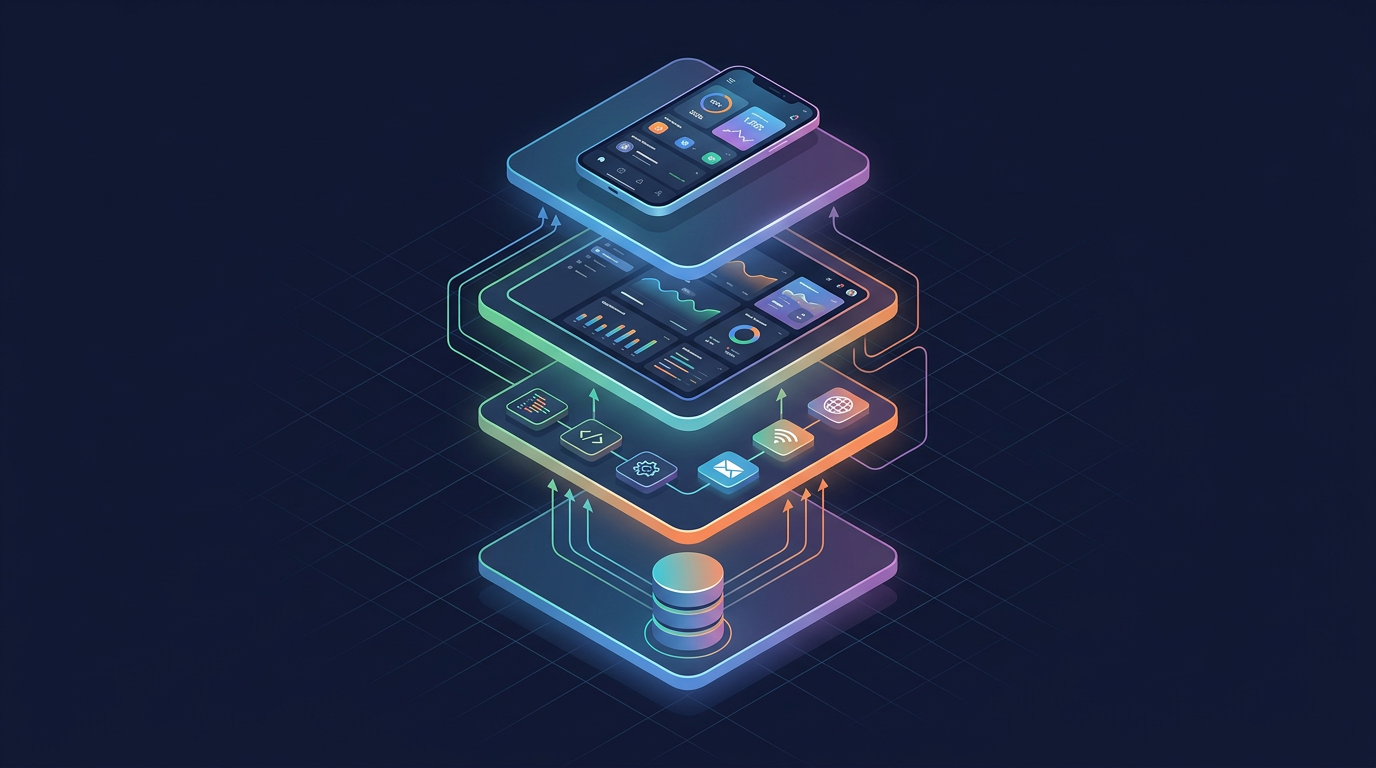
For most custom ERP systems, a reliable choice is a relational database such as PostgreSQL, a well-supported backend framework (Node.js with TypeScript, Python with Django, or .NET), a modern web frontend such as React or Next.js, and cloud hosting with automated backups. The best stack is less about trends and more about data integrity, reporting, security, and finding developers who can maintain it for years.
Here is how to think about each layer.
Database: start relational
ERP data is highly connected: orders link to customers, products, invoices, payments, and stock movements. Relational databases like PostgreSQL or MySQL handle these relationships, transactions, and reports reliably. PostgreSQL is a strong default because of its reliability, rich features, and open-source licence.
Document databases like MongoDB can work for some modules, but accounting and inventory usually benefit from strict relational structure.
Backend: pick what your team can maintain
Option | Strengths | Consider if |
|---|---|---|
Node.js + TypeScript | One language across frontend and backend, large ecosystem | Your team already uses JavaScript |
Python + Django | Fast development, built-in admin, strong for data and AI | You want rapid builds and analytics |
.NET (C#) | Mature, strong typing, enterprise tooling | You are in a Microsoft environment |
Java + Spring | Very mature, scales well | Large enterprise teams |
Whatever you choose, use typed code, clear APIs, and automated tests. ERPs live a long time.
Frontend: data-heavy screens
ERP users work with tables, forms, filters, and dashboards all day. React or Next.js with a solid component library works well, as does Angular for teams that prefer its structure. Focus on fast tables, keyboard-friendly forms, and role-based screens.
Mobile access
If warehouse or field staff need access, a responsive web app may be enough. For barcode scanning, offline use, or camera features, a cross-platform app built with React Native or Flutter shares code across Android and iOS.
Infrastructure essentials
Cloud hosting (AWS, Azure, Google Cloud, or a reliable VPS provider)
Automated daily backups with tested restores
Role-based access control and audit logs
Background job queues for reports, emails, and imports
Monitoring and error tracking
Leave room for AI
Clean, structured ERP data makes AI features like demand forecasting, document extraction, and natural-language reports much easier to add later. Design your data model with that in mind. If you are still at the budgeting stage, read our guide to custom ERP software cost.
At F Koin Tech, we commonly work with React, Next.js, Node.js and Express.js, PostgreSQL, MongoDB, and React Native, as in our Innocap and BLS Points projects. See our custom software solutions or discuss your ERP plan with us.